
In 2026, many authors make outstanding contributions to our journal. Their articles published with us have received very well feedback in the field and stimulate a lot of discussions and new insights among the peers.
Hereby, we would like to highlight some of our outstanding authors who have been making immense efforts in their research fields, with a brief interview of their unique perspectives and insightful views as authors.
Outstanding Authors (2026)
Manuel A. Ocasio, Tulane University School of Medicine, USA
Vinay Saggar, NewYork-Presbyterian, USA
James A. Haley, University of London, UK
Outstanding Author
Manuel A. Ocasio
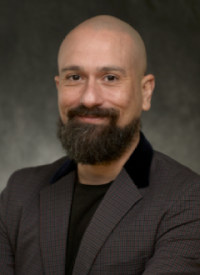
Dr. Manuel A. Ocasio is an Assistant Professor of Pediatrics at Tulane University School of Medicine, where he directs NOLAHYPE (Healthy Youth Thru Prevention and Engagement), a youth-centered program of the Section of Adolescent Medicine, and co-leads the Tulane site for the Adolescent Medicine Trials Network for HIV Interventions (ATN). His NIH-funded research centers on addressing HIV-related health inequities among Black and Latine LGBTQIA+ youth in the Deep South, with a particular focus on community-engaged and social media-based approaches to HIV testing and PrEP engagement. He is also exploring how social media can be leveraged as a tool to enhance the reach and effectiveness of community health workers and public health organizations.
Dr. Ocasio explains that, for better or worse, academic writing—especially through peer-reviewed publications—remains the gold standard for validating scientific evidence. It lays a foundation for identifying gaps in knowledge, justifying research priorities, and ultimately guiding scientific progress. Beyond communicating findings, academic writing imposes structure and discipline. The act of writing forces him to think rigorously about his own work: to interrogate potential biases, acknowledge limitations, and clarify the practical implications of findings for public health. When done well, a published paper is not only understandable to fellow scientists but accessible enough that communities beyond the research world can understand and use it.
Dr. Ocasio emphasizes that keeping up-to-date in a rapidly evolving field requires deliberate effort. Academic writing itself is time-consuming, and it can be easy to fall into the trap of writing in isolation from the broader scientific dialogue. He carves out dedicated time to read new literature, attend conferences, and engage in conversation with colleagues across disciplines. Oftentimes, conversations uncover insights that a literature search alone cannot. As an early-career researcher, he has also found it invaluable to pursue career development opportunities, including mentoring programs designed for scholars who share similar research interests or lived experiences. These programs sharpen both his scholarly skills and his intellectual curiosity. He has also adopted AI-assisted literature search tools to navigate the overwhelming number of new publications, ensuring he does not overlook important work.
“My motivation to write stems from a responsibility to those who generously share their time, experiences, and stories with us. When community members open up about their lives, their health, and the challenges they face, we are obligated to do something meaningful with that information. Disseminating research findings is critical to ensuring their contributions can inform efforts to improve the health of the communities we serve. I am also driven by a commitment to representation. As a queer Latine scholar working in HIV prevention, I want to make sure voices like mine are represented in public health discourse. Even though the work is demanding, the stakes make it worth it,” says Dr. Ocasio.
(by Sasa Zhu, Brad Li)
Vinay Saggar
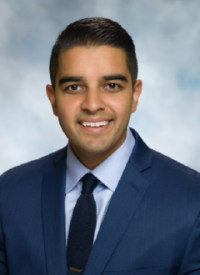
Dr. Vinay Saggar is an Emergency Medicine Attending at NewYork-Presbyterian/Columbia University College of Physicians & Surgeons. He holds roles as Assistant Professor in the Department of Emergency Medicine, Assistant Program Director of NYP Columbia-Cornell Emergency Medicine Residency Program, and Co-Chair of Columbia Emergency Medicine Wellness Committee (EDWell). He went to Rutgers-RWJ for medical school and completed his Emergency Medicine residency at Jacobi-Montefiore. His research interests lie in Resident Education and Departmental Scholarly Activity, Wellness and Physician Resilience, and Resident + Faculty Development. He is also a big proponent of Digital Health and its integration in clinical practice, including exploring the possibilities of mobile health, virtual reality, and augmented reality.
To Dr. Saggar, the beauty in academic writing is the endless possibilities of subject matter to investigate or scholarly activity to pursue. Every day, the world evolves, with new initiatives and technology that can lead to a better tomorrow and change the way medicine is practiced. It is academic writers’ responsibility to inform the community about changes and provide data that practitioners can use to interpret how new projects may alter their approach to treating patients.
According to Dr. Saggar, selecting the “right” evidence for synthesis and analysis is an integral part of advancing the field of medicine. Critically appraising every study is crucial for authors to evaluate its relevance to their practice.This is particularly important as they move into AI summarizations and Open Evidence tools, where evidence can be incorrectly tailored to try to fit a proposed question. In general, well-written evidence marries detailed and specific examples with logical conclusions and should leave the reader with a clearly defined idea of its applicability to clinical practice.
Dr. Saggar emphasizes that Conflict of Interest (COI) disclosure is also vital for both authors and evaluators when reviewing a study. Authors aim to publish their work without bias; however, awareness of COIs, especially with regard to funding sources, can inevitably influence the interpretation of results and overall conclusions. For instance, if a study is funded by a company that has a vested interest in demonstrating the effectiveness of its product, the resulting research may tilt towards advocating for those favorable results or interpretations. It is crucial for readers to be informed about any potential COIs related to a research project. They should evaluate each study on a case-by-case basis to determine whether these conflicts significantly impact the overall conclusions drawn from the research.
(by Sasa Zhu, Brad Li)
James A. Haley

Dr. James A. Haley is a Chartered Psychologist and a Postdoctoral Research Associate in the Population Health Research Institute at City St George’s, University of London, UK. He also holds a PhD in Health Psychology from Loughborough University, UK. His research interests focus on designing, adapting and evaluating evidence-based health behavior change interventions that aim to reduce social isolation and increase physical activity in adults with various health conditions. Using mixed methods approaches, he is particularly interested in understanding the role of physical activity and sedentary behavior in preventing and managing various chronic health diseases as we age throughout life. Most recently, he is designing a novel mobile health (mHealth) intervention to increase physical activity for people living with peripheral arterial disease. Learn more about him here, and follow him on LinkedIn.
From an academic point of view, Dr. Haley points out that a good author needs more than just the ability to write. They must be able to think clearly, organize their ideas logically, and communicate them in a way that others can easily understand. Authors require strong language skills, creativity, and clear awareness of how to design research. In addition, effective authors thoughtfully revise their work and write with honesty and responsibility. Although writing is a skill honed over time, rigorous thought and careful planning can make research inclusive and accessible to a wide range of readers, thereby maximizing its impact.
There are several approaches Dr. Haley applies to avoid biases in his writing. He approaches the topic with an open and questioning mindset. He ensures he bases his points on reliable evidence rather than personal opinion, and he does his best to avoid any emotional or exaggerated language. Additionally, he is always cautious that there are always two sides to a debate and he ensures he reviews his research carefully to ensure it presents a balanced and thoughtful perspective.
“Academic writing takes time and is a team effort, but I am motivated by my genuine enjoyment of research and learning. I like solving global pressing health challenges and exploring new and exciting ideas in a structure, evidence-based way. I also value working with like-minded, passionate colleagues as it creates an environment where ideas can be challenged and improved. Most importantly, I am driven by my long-term career goal of becoming a Professor and contributing to adding knowledge in my field through highly impactful research,” says Dr. Haley.
(by Brad Li, Masaki Lo)